
Pre-settlement funding can look helpful when medical bills, missed paychecks, rent, and daily expenses pile up before a personal injury case settles. It may give an injured person access to money while a lawsuit or insurance claim is still pending. However, it can also reduce the final amount the injured person receives after settlement.
Why Pre-Settlement Funding Is A Trending Settlement Topic
Pre-settlement funding is getting more attention because lawsuit financing has become a bigger part of civil litigation and settlement discussions. Some injured people use it to cover urgent expenses while waiting for a case to resolve. At the same time, lawmakers, courts, insurers, and consumer advocates are paying closer attention to disclosure rules, funding costs, and whether outside funding can affect settlement decisions.
Litigation funding is no longer viewed as a small niche issue. Chambers and Partners notes that litigation funding has continued to move into ordinary dispute planning. Some states are also adopting rules that require certain funding arrangements to be disclosed. For example, Colorado HB25-1329 requires certain foreign third-party litigation funders to disclose information to the state attorney general.
For personal injury claimants, the practical question is simple: will pre-settlement funding help you get through a difficult time, or will it take too much from your final recovery?
What Is Pre-Settlement Funding?
Pre-settlement funding is money advanced to a claimant before a case settles or reaches judgment. It is often marketed as lawsuit funding, settlement funding, legal funding, or a lawsuit advance. In many arrangements, the funding company expects repayment from the settlement or verdict if the case succeeds.
This is different from a traditional bank loan. Many pre-settlement funding agreements are described as non-recourse, which generally means repayment depends on whether the case produces a recovery. If there is no recovery, the injured person may not owe repayment under the contract. Still, every agreement is different, and the exact language matters.
Why Injured People Consider It
Personal injury cases can take months or longer. During that time, the injured person may be out of work, attending medical appointments, dealing with pain, and waiting for the insurance company to evaluate liability and damages. A funding advance may help with rent, groceries, transportation, utilities, childcare, or other urgent costs.
That financial breathing room can matter. Some injured people feel pressured to accept a low settlement because they need money immediately. Funding may reduce that pressure in some cases. However, it can also create a new financial obligation that must be satisfied before the claimant receives the remaining settlement funds.
How Pre-Settlement Funding Can Affect A Settlement
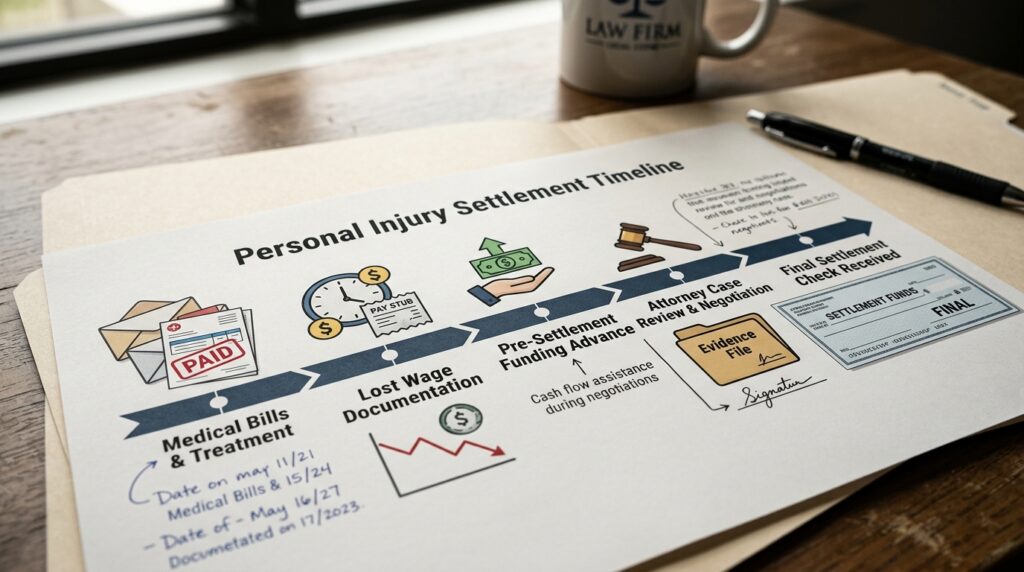
Pre-settlement funding may affect a case in several ways. First, the funding amount, fees, and repayment terms may reduce the net settlement. Second, the agreement may create additional paperwork before settlement funds can be distributed. Third, the funding company may need to confirm the settlement amount and repayment balance before the client receives the final check.
For broader settlement topics, visit the Litigation & Settlements category. You can also read about changing case values in Why Courts Are Awarding Larger Verdicts in 2025.
The Main Risk Is The Final Net Recovery
The most important number is not the settlement amount alone. It is the amount the injured person keeps after attorney’s fees, litigation costs, medical bills, liens, health insurance reimbursement claims, and any funding repayment. A settlement that looks large on paper may feel much smaller once all deductions are applied.
For example, if a claimant receives an advance early in the case and the case takes longer than expected, fees or charges may grow. The repayment amount may become significantly higher than the original advance. This is why injured people should ask for a clear written explanation of the total amount owed at different points in time.
Do Not Focus Only On The Advance Amount
A funding offer may highlight the amount available today. That number matters, but it is not the only issue. The claimant should also review the repayment formula, fees, timing, whether charges compound, whether the company can claim a share of future proceeds, and what happens if the settlement is smaller than expected.
Questions To Ask Before Signing A Funding Agreement
Before accepting pre-settlement funding, an injured person should understand the agreement in plain language. The contract should not be treated as a quick cash document. It can affect the final settlement distribution.
Important Questions To Review
Key questions include:
- How much money will I receive now?
- How much will I owe if the case settles in 6 months, 12 months, or 24 months?
- Are the charges fixed, monthly, compounding, or capped?
- Is the agreement truly non-recourse?
- Does the funder get paid before or after medical liens?
- Can the funding company influence settlement decisions?
- What happens if the settlement is smaller than expected?
- Can I cancel the agreement within a short review period?
These questions help the claimant compare the short-term benefit against the long-term cost. A funding agreement may be useful in some situations, but it should never be signed without understanding how repayment works.

Can A Funding Company Control Your Case?
A funding company should not control the legal strategy, decide whether to accept a settlement, or interfere with attorney-client communication. Settlement decisions belong to the client after receiving legal advice from the attorney. However, a funding agreement can still create pressure because the repayment balance may grow while the case remains pending.
This is one reason litigation funding disclosure has become a larger legal issue. Some defendants and insurers argue that funding can affect settlement demands. Plaintiffs and funding companies often argue that funding helps injured people avoid unfair low offers. The practical reality depends on the agreement, the case facts, and the claimant’s financial situation.
Evidence And Documents To Keep
Anyone considering funding should keep copies of the agreement, repayment schedule, fee disclosures, emails, text messages, payment records, and any funding payoff statement. These documents may be needed when the case settles.
For more on organizing proof in injury claims, visit the Evidence & Investigation category. If digital records or AI-generated documents are part of the case, this guide on AI-generated evidence in court may also be useful.
Alternatives To Pre-Settlement Funding
Pre-settlement funding may not be the only option. Depending on the situation, an injured person may consider payment plans with medical providers, health insurance benefits, disability benefits, family assistance, reduced expenses, hardship programs, or attorney-guided lien arrangements. These options may still have consequences, but they may cost less than a funding contract.
The right choice depends on the urgency of the financial need, the likely case value, expected settlement timeline, medical treatment status, and the contract terms offered by the funding company.
Final Thoughts
Pre-settlement funding can help an injured person survive financially while a personal injury claim is pending. It may reduce pressure to accept a low offer too early. However, it can also reduce the final amount the injured person receives after settlement.
Before signing, claimants should review the repayment terms, ask for a written payoff schedule, compare alternatives, and understand how the funding will interact with attorney’s fees, case costs, medical liens, and insurance reimbursement claims. In settlement planning, the real question is not just how much money is available today. It is how much will remain when the case is finally resolved.
Last modified: July 6, 2026