
How AI-Generated Evidence Is Changing Personal Injury Cases
AI-generated evidence is becoming more common in personal injury cases. Courts are now seeing digital reconstructions, predictive analytics, and automated reports used to support claims. These tools may influence how liability and damages are evaluated, but they also raise questions about reliability and legal standards.
What Is AI-Generated Evidence?
AI-generated evidence refers to information created or analyzed using artificial intelligence systems. This may include accident reconstructions, facial recognition data, voice analysis, or predictive models based on past cases.
In injury claims, AI may be used to recreate accident scenes or analyze medical records. These tools can process large amounts of data quickly, offering insights that may not be easily visible through manual review.
Examples of AI Evidence in Injury Claims
- Automated accident reconstruction reports
- AI-analyzed surveillance footage
- Medical record pattern analysis
- Predictive injury outcome models

How Courts Evaluate AI Evidence
Courts apply existing evidence rules to AI-generated content. Judges may examine whether the technology used is reliable and widely accepted. The source of the data and how it was processed may also be reviewed.
Legal standards such as the Daubert or Frye tests may be used to determine admissibility. These standards focus on whether the method is scientifically valid and properly applied.
For more on evidence standards, you may review this guide from the Legal Information Institute.
Challenges With AI-Generated Evidence
While AI tools may offer efficiency, they also introduce risks. One concern is bias in algorithms, which may affect outcomes. If the data used to train the system is flawed, the results may also be inaccurate.
Another issue involves transparency. Some AI systems operate as “black boxes,” meaning their decision-making process is not easily understood. This may make it difficult to challenge the evidence in court.
Key Concerns
- Lack of transparency in AI models
- Potential bias in training data
- Difficulty verifying results
- Questions about data authenticity
Authentication and Admissibility
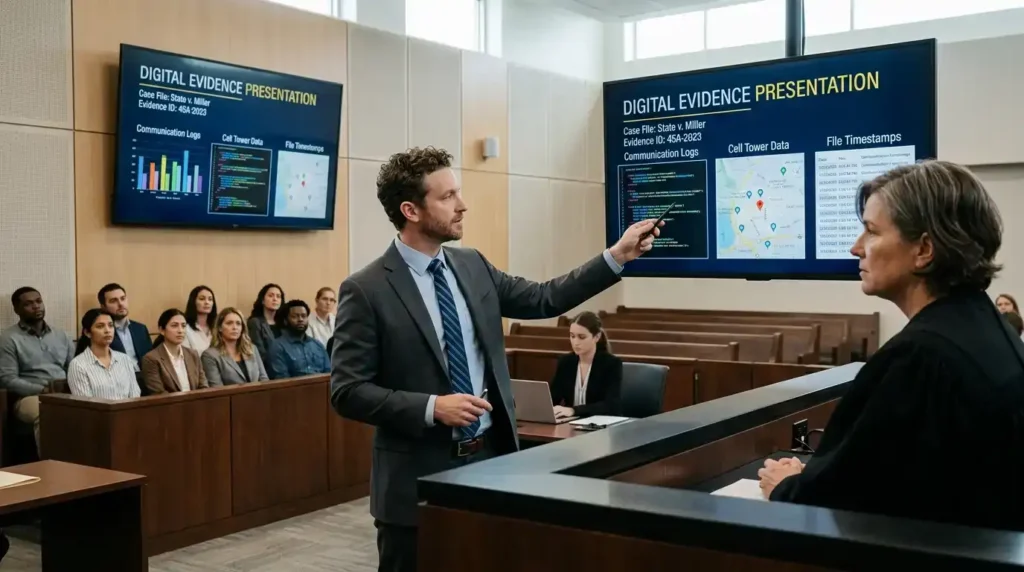
To be accepted in court, AI-generated evidence must be authenticated. This means proving that the evidence is what it claims to be. Attorneys may need to show how the data was collected, stored, and processed.
Metadata and digital records play a key role in this process. Proper documentation helps establish credibility and reduces the risk of evidence being challenged.
You may also find helpful insights from U.S. Department of Justice guidelines on digital evidence.
The Role of Expert Witnesses
Expert witnesses are often used to explain AI-generated findings. These professionals may describe how the system works and interpret the results for the court.
Their testimony may help bridge the gap between complex technology and legal understanding. However, opposing parties may also challenge their conclusions.

Future Implications for Injury Claims
AI-generated evidence is expected to become more common. As technology evolves, courts may continue refining how these tools are evaluated.
Legal professionals may need to stay updated on both technology and evidence rules. Understanding how AI works may become increasingly relevant in building or defending a claim.
Related Topics You May Find Helpful
You may also explore related topics on our site:
Final Thoughts
AI-generated evidence may offer new ways to analyze injury cases, but it also raises important legal questions. Courts continue to evaluate how these tools fit within existing rules. As this area develops, understanding both the benefits and limitations of AI evidence may be valuable.
Last modified: April 28, 2026