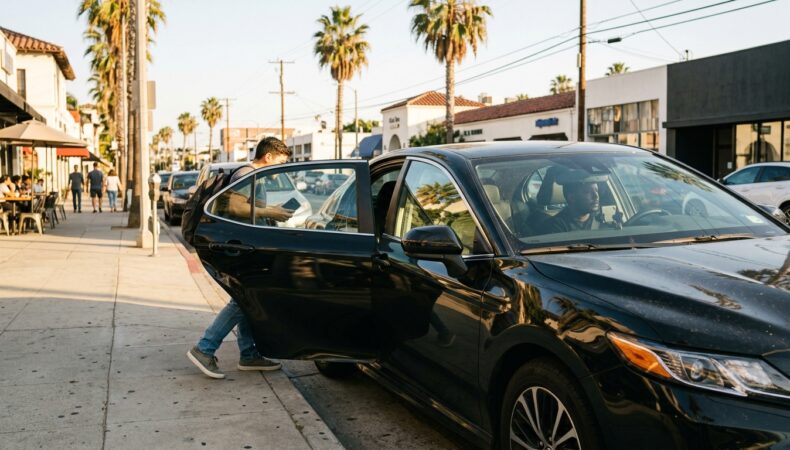
The change has raised important questions about rideshare accident compensation, insurance responsibilities, and passenger protection.
However, the legislation did not eliminate every $1 million rideshare insurance requirement. The distinction between liability insurance and uninsured motorist coverage remains essential.
This guide explains the new insurance requirements, how the rules affect injured passengers, and what evidence may support a California rideshare accident claim.
California Rideshare Insurance 2026: Understanding SB 371
Senate Bill 371, signed in 2025 and implemented in 2026, revised California’s required uninsured and underinsured motorist coverage for transportation network companies.
These businesses connect passengers with drivers through digital platforms. Uber and Lyft are familiar examples.
Previously, California required $1 million in combined uninsured and underinsured motorist coverage during qualifying passenger trips. The new law lowered those required limits.
What Changed for Uber and Lyft Insurance Coverage?
Under the updated requirements, transportation network companies must maintain uninsured and underinsured motorist coverage of at least $60,000 per person and $300,000 per incident during the covered passenger-trip period.
These rules generally concern the period beginning when a passenger enters the vehicle and ending when that passenger exits.
The changes affect an important source of compensation when another driver causes a collision but lacks sufficient insurance.
The New $60,000 and $300,000 UM/UIM Limits
Uninsured motorist coverage, commonly called UM coverage, may apply when an at-fault driver has no applicable automobile liability insurance.
Underinsured motorist coverage, or UIM coverage, may become relevant when the responsible driver’s liability insurance is insufficient to cover legally recoverable damages.
For qualifying rideshare trips, the new statutory UM/UIM minimums are:
- $60,000 per person: Coverage limit for an individual injured claimant.
- $300,000 per incident: Aggregate coverage limit involving multiple injured claimants.
These figures represent required minimum limits, not guaranteed settlement payments.
For example, imagine a rideshare passenger suffers injuries requiring $95,000 in medical treatment and additional financial losses.
If an uninsured driver caused the accident, the available rideshare UM coverage could become an important issue.
However, the passenger would still need to establish coverage eligibility, liability, compensable damages, and compliance with applicable policy conditions.
Other sources of recovery may also require investigation.
Why the $1 Million Liability Requirement Still Matters
A common misunderstanding is that California eliminated the entire $1 million insurance protection associated with rideshare trips.
That is incorrect.
The legislation changed the specified UM/UIM requirements. The separate $1 million liability coverage requirement for qualifying rideshare passenger trips remains in place.
Liability insurance and uninsured motorist insurance address different circumstances.
For instance, when a rideshare driver negligently causes an accident, the transportation network company’s applicable liability coverage may be relevant.
However, when an unrelated uninsured driver causes the collision, the rideshare UM/UIM coverage may become central to the passenger’s recovery options.
Therefore, identifying the responsible driver is especially important before determining which insurance policy applies.
Multiple policies may be involved, and insurers may dispute responsibility, coverage conditions, or the amount of damages.

Why Insurance Coverage Depends on the Rideshare Trip Status
Rideshare insurance is different from ordinary personal automobile coverage because protection may change according to the driver’s activity within the application.
California generally distinguishes among periods when the app is off, when the driver is waiting for a request, and when a ride has been accepted or a passenger is being transported.
App Off, Waiting for a Ride, and Active Passenger Trips
When the rideshare app is off, the driver’s personal automobile insurance generally becomes the primary coverage consideration.
When the app is on but the driver has not accepted a ride, a separate statutory insurance framework applies.
Once a ride is accepted, California requires additional coverage. The specific obligations depend on whether the driver is traveling to pick up a passenger or transporting someone.
The SB 371 UM/UIM change specifically concerns the covered passenger-in-vehicle period.
For that reason, investigators should verify the exact accident time against the trip record.
A screenshot identifying the driver, pickup location, route, and ride status can help establish relevant details.
Furthermore, the company’s electronic trip records may contain information needed to resolve disputes about coverage timing.
Without these records, insurers may disagree about which policy was active when the collision occurred.
Who Could Be Responsible for a Rideshare Accident?
Determining accident responsibility requires examining how the collision happened.
Potentially liable parties may include the rideshare driver, another motorist, a vehicle owner, or another party whose negligence contributed to the incident.
In some circumstances, a transportation network company’s own conduct or legal responsibilities may also require investigation.
However, a rideshare company is not automatically liable for every injury involving one of its drivers.
California negligence principles generally require evidence of duty, breach, causation, and legally recognizable harm.
For example, a driver who runs a red light and strikes a rideshare vehicle may bear responsibility for the resulting injuries.
Alternatively, a rideshare driver who makes an unsafe turn may be responsible for a collision involving another vehicle.
When multiple people contribute to an accident, comparative negligence principles may affect recoverable damages.
California generally allows proportionate recovery even when an injured claimant shares some responsibility.
Ultimately, insurance availability and legal liability are related but distinct questions.
How Injured Rideshare Passengers Can Protect Their Claims
Passengers injured in Uber or Lyft collisions may face medical bills, lost income, rehabilitation expenses, and uncertainty about which insurance company should respond.
Although the new coverage requirements can affect available insurance proceeds, they do not automatically determine the total legal value of an injury claim.
Evidence preservation and accurate documentation remain important.
Medical Evidence, Insurance Claims, and Compensation
After an accident, the first priority should be obtaining appropriate medical care.
Some injuries may not appear immediately, while others require emergency evaluation or continuing treatment.
Medical records can document the nature of an injury, recommended care, and how symptoms affect daily activities.
However, treatment records alone do not automatically establish that another person’s negligence caused the injury.
Claimants should also preserve evidence explaining how the collision occurred.
Useful evidence after a rideshare accident
- Rideshare booking confirmation and trip receipts.
- Screenshots showing pickup and destination information.
- Photographs of vehicle damage and road conditions.
- Police reports and witness contact information.
- Medical bills and treatment records.
- Documents showing lost income or missed work.
- Available dashcam or surveillance footage.
Electronic evidence may be especially important when several insurance companies dispute coverage or the sequence of events.
For additional guidance, read our guide to AI-generated evidence in court. It explains why authenticity and reliability matter when accident evidence involves modern technology.

What damages can an injured passenger claim?
California personal injury claims may include economic and noneconomic damages when supported by evidence and applicable law.
Economic damages can include emergency treatment, surgery, physical therapy, future medical care, lost wages, and reduced earning capacity.
Noneconomic damages may include physical pain, emotional distress, and diminished enjoyment of life.
However, the amount recoverable depends on liability, causation, the injuries involved, and any applicable legal limitations.
Insurance policy limits can also affect how much compensation is practically available from a particular insurer.
Therefore, injured people should avoid assuming that a policy limit guarantees payment or that a low insurance limit necessarily determines the complete value of their claim.
What happens when medical bills exceed UM/UIM coverage?
When injuries exceed available rideshare uninsured or underinsured motorist coverage, identifying other potential recovery sources becomes important.
Depending on the circumstances, a claimant may need to review the responsible driver’s assets, other liable parties, and additional applicable insurance policies.
The injured passenger’s personal automobile coverage might also warrant examination, although its applicability cannot be assumed.
Coverage coordination may involve statutory provisions, policy exclusions, offsets, and specific conditions.
For these reasons, serious rideshare claims often require detailed insurance review rather than a simple comparison of medical bills against one policy limit.
Why recent rideshare litigation matters
In September 2026, CalMatters reported a $40 million arbitration award involving a passenger who died after being left near a California freeway.
The arbitrator determined that the rideshare company and driver were responsible under the circumstances addressed in that proceeding.
However, the decision was a private arbitration award, not a binding California appellate ruling.
It also did not establish a standard settlement value for other rideshare injury cases.
Nevertheless, the case highlights why passenger safety, ride termination, and the circumstances of drop-off decisions may matter in serious injury litigation.
What deadlines apply to rideshare injury lawsuits?
California Code of Civil Procedure Section 335.1 generally establishes a two-year limitation period for many personal injury lawsuits.
However, exceptions can affect the deadline. Claims involving government entities may require earlier administrative filings.
In addition, insurance agreements can establish notice and procedural requirements that should be reviewed separately.
Therefore, injured people should not assume that settlement negotiations automatically extend the time available to take legal action.
Frequently asked questions
Did California eliminate $1 million rideshare insurance in 2026?
No. SB 371 reduced the required UM/UIM coverage for qualifying passenger trips. The separate $1 million liability insurance requirement remains.
What are the new rideshare UM/UIM limits?
The statutory minimums are $60,000 per person and $300,000 per incident for the covered passenger-trip period.
Can injured passengers recover compensation when another driver caused the accident?
Potentially. Available compensation depends on fault, insurance coverage, damages, and other applicable legal requirements.
Does SB 371 apply to every automobile accident?
No. The law changes specific insurance requirements for transportation network companies. Ordinary private automobile policies operate under a different coverage framework.
Where can readers verify the change?
The California Senate’s transportation legislation summary identifies SB 371 and explains the revised UM/UIM requirements.
Final thoughts
California rideshare insurance changed in 2026, and the distinction between liability insurance and uninsured motorist coverage is now especially important.
SB 371 reduced the required UM/UIM limits for covered passenger trips without eliminating the separate $1 million liability requirement.
For injured passengers, understanding the ride status, identifying responsible parties, preserving evidence, and reviewing applicable policies can help protect available legal options.
When serious injuries or disputed coverage complicate a claim, an appropriately qualified California attorney can provide advice based on the individual circumstances.
Disclaimer: This article provides general educational information about California law as of October 2026. It does not constitute individualized legal advice.