
Workplace violence injuries are a growing concern for healthcare, retail, transportation, service, and public facing workers. Assaults, threats, harassment, and aggressive encounters can lead to physical injuries, emotional trauma, missed work, and legal questions about workers’ comp, employer safety duties, and possible third party claims.
Why Workplace Violence Injuries Are Trending In 2026
Workplace violence has become a major safety issue because many workers interact directly with patients, customers, visitors, clients, passengers, or members of the public. These interactions can create unpredictable risks, especially in healthcare settings, emergency departments, retail stores, convenience stores, transportation jobs, home healthcare, and social service environments.
The National Institute for Occupational Safety and Health explains that workplace violence can include verbal abuse, threats, and physical assaults directed at people at work or on duty. NIOSH also notes that the impact can range from psychological harm to physical injury or death.
Healthcare has become a central focus. The Joint Commission states that healthcare workers are several times more likely to suffer workplace violence injuries than workers in private industry overall. This makes workplace violence a practical legal topic for workers who need to understand claim options after an incident.
What Counts As Workplace Violence?
Workplace violence is not limited to a physical assault. It may include threats, intimidation, harassment, bullying, aggressive behavior, stalking, sexual harassment, robbery related violence, or physical attacks. Some incidents happen between employees, but many involve patients, customers, visitors, clients, or strangers.
Physical And Psychological Injuries
Physical injuries may include bruises, fractures, sprains, head injuries, back injuries, cuts, bites, or injuries from falls during an attack. Psychological harm may include anxiety, panic attacks, sleep disruption, depression, post traumatic stress symptoms, and fear of returning to work.
These emotional effects matter because violence can change how a worker feels in the workplace. A nurse may become fearful during patient care. A retail worker may struggle after a robbery. A transit worker may feel unsafe during public interactions. A home healthcare worker may feel isolated after a threatening visit.
For related information about emotional harm in injury claims, see Emotional Trauma & Mental Health Claims.

Industries With Higher Workplace Violence Risks
Workplace violence can happen anywhere, but some jobs carry higher exposure. NIOSH identifies healthcare and social assistance workers as having the greatest risk for nonfatal violence resulting in days away from work. NIOSH also notes that fatal violence risk is greater for workers in sales, protective services, and transportation.
Healthcare And Social Services
Healthcare workers may face violence from patients, visitors, family members, or others in stressful settings. Emergency departments, psychiatric units, long term care facilities, home healthcare, and social service roles can involve people in crisis, pain, intoxication, emotional distress, or unstable conditions.
Retail And Customer Facing Work
Retail workers may face robbery related violence, aggressive customers, shoplifting confrontations, late night shifts, isolated work, poor visibility, or cash handling risks. Convenience stores, gas stations, pharmacies, restaurants, and small retail locations may carry additional hazards depending on staffing, security, and location.
Transportation And Public Service Jobs
Transit workers, taxi drivers, delivery workers, security guards, and public service employees may deal with unpredictable public interactions. These jobs may involve confined spaces, late hours, cash transactions, isolated routes, or direct conflict with customers.
Workers’ Comp After Workplace Violence
Workers’ comp may apply when the injury happens during work or because of work related duties. A nurse attacked by a patient, a cashier injured during a robbery, or a delivery worker assaulted while making a job related delivery may have a workers’ comp claim depending on state law and the facts.
A claim may involve emergency treatment, follow up care, counseling, time away from work, physical therapy, medication, work restrictions, and wage loss issues. Mental health treatment can also become part of the claim when the psychological effects are connected to the workplace incident.
For related information about damages and losses after an injury, visit the Damages & Compensation category.
When A Third Party Claim May Apply
Workers’ comp is not always the only possible path. A third party claim may arise when someone other than the employer contributed to the harm. This may include a violent customer, negligent security company, property owner, contractor, event organizer, or another outside party.
For example, a retail worker may be injured because a property had poor lighting, broken locks, no security response, or ignored prior incidents. A healthcare worker may be harmed by a visitor after repeated security warnings were not handled. A transportation worker may be assaulted in a location where another party controlled safety conditions.
Third party claims depend heavily on facts. Prior similar incidents, police reports, security footage, staffing records, incident logs, and witness statements may all matter.
Evidence That May Help A Workplace Violence Injury Claim
Evidence is often critical after workplace violence. An incident may happen quickly, and details can be disputed later. Workers can preserve documentation that shows what happened, where it happened, who was involved, and what injuries followed.
Useful evidence may include incident reports, police reports, medical records, photos of injuries, surveillance footage, coworker statements, visitor logs, call records, emails, text messages, prior complaint records, and safety policies. If the worker reported earlier threats, those reports may also be important.
For more on claim documentation, visit Evidence & Investigation.
What Workers Can Do After A Violent Incident
1. Get Medical Care
Medical care can document physical injuries, pain symptoms, emotional distress, and treatment needs. Even if injuries seem minor at first, symptoms may become more serious after the initial shock fades.
2. Report The Incident In Writing
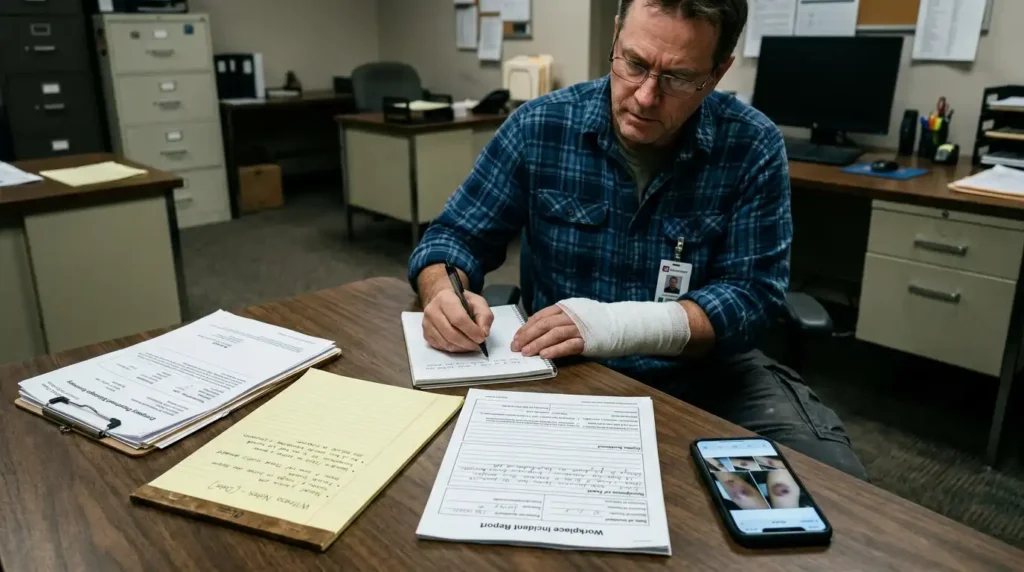
A written workplace report can help preserve the timeline. Workers can include the date, time, location, people involved, witnesses, prior warnings, and immediate symptoms.
3. Request Copies Of Records
Workers may ask about incident reports, safety reports, surveillance footage, police reports, and internal reporting procedures. Some records may need to be requested quickly before they are overwritten or deleted.
4. Track Emotional Symptoms
Workplace violence often causes more than visible injuries. A worker can document nightmares, anxiety, fear, panic, missed work, therapy appointments, and changes in daily life.
Employer Safety Duties And Prevention Programs
OSHA states that a well written and implemented workplace violence prevention program, combined with engineering controls, administrative controls, and training, can reduce workplace violence. OSHA also advises employers in healthcare to evaluate worksites, identify risk factors, and develop prevention strategies.
Safety measures may include reporting systems, staff training, panic buttons, controlled access, security staffing, lighting, conflict de escalation, clear visitor policies, incident review, and support after an event. A workplace that ignores known risks may create more questions after an injury.
Final Thoughts
Workplace violence injuries can affect a worker physically, emotionally, and financially. Healthcare, retail, transportation, and other public facing jobs often involve direct contact with people in stressful or unpredictable situations. That makes prevention, reporting, and documentation especially important.
After an assault or threat at work, workers may need to understand workers’ comp, possible third party claims, medical documentation, emotional trauma, and workplace safety evidence. A strong record can help clarify what happened and how the incident affected the worker’s health, job, and daily life.
Last modified: June 5, 2026